


23.05.2025
Prevalence and causes:
Iron deficiency anemia is more common in patients with cystic fibrosis (CF), especially as lung disease progresses.
Causes of deficiency include:
• respiratory iron loss (sputum),
• gastrointestinal iron loss,
• chronic inflammation that affects iron metabolism.
Infections:
Despite the association between iron and bacteria (especially Pseudomonas aeruginosa), studies have not found worsening of lung function or increased exacerbations with oral iron.
Diagnosis:
Evaluation of iron levels is complicated by the influence of inflammation on laboratory markers:
• ferritin may be elevated due to inflammation, even in the presence of iron deficiency;
• transferrin and transferrin saturation are decreased;
• C-reactive protein (CRP) is recommended for correct interpretation.
Optimal limits:
• <12 ng/mL ferritin (classic WHO limit) — not sensitive enough in CF;
• <30 ng/mL — reasonable limit in chronic inflammation;
• <45 ng/mL — recommended by the American Gastroenterological Association for anemia.
Treatment:
• First-line treatment — oral iron:
• adults: 150–200 mg elemental iron/day;
• children: 3–6 mg/kg/day (in 2–3 divided doses).
• Gastrointestinal intolerance is common.
• New studies support lower or alternate-day doses for better tolerability and absorption.
• Hepcidin — a hormone that regulates iron metabolism — increases after iron ingestion (especially ≥60 mg) and reduces its further absorption over the next 24 hours.
Additional factors:
• Vitamin C improves iron absorption;
• Calcium, phytates (cereals), tannins (tea) — reduce.
• Intravenous iron administration is possible in case of intolerance, but its effectiveness and safety in CF require additional study.
Current problems:
• Lack of unified protocols for screening, diagnosis and treatment of iron deficiency in CF.
• Difficulties in differentiating between anemia of chronic disease and true iron deficiency.
• Some doctors fear that iron may stimulate the growth of bacteria, although there is no scientific evidence for this.
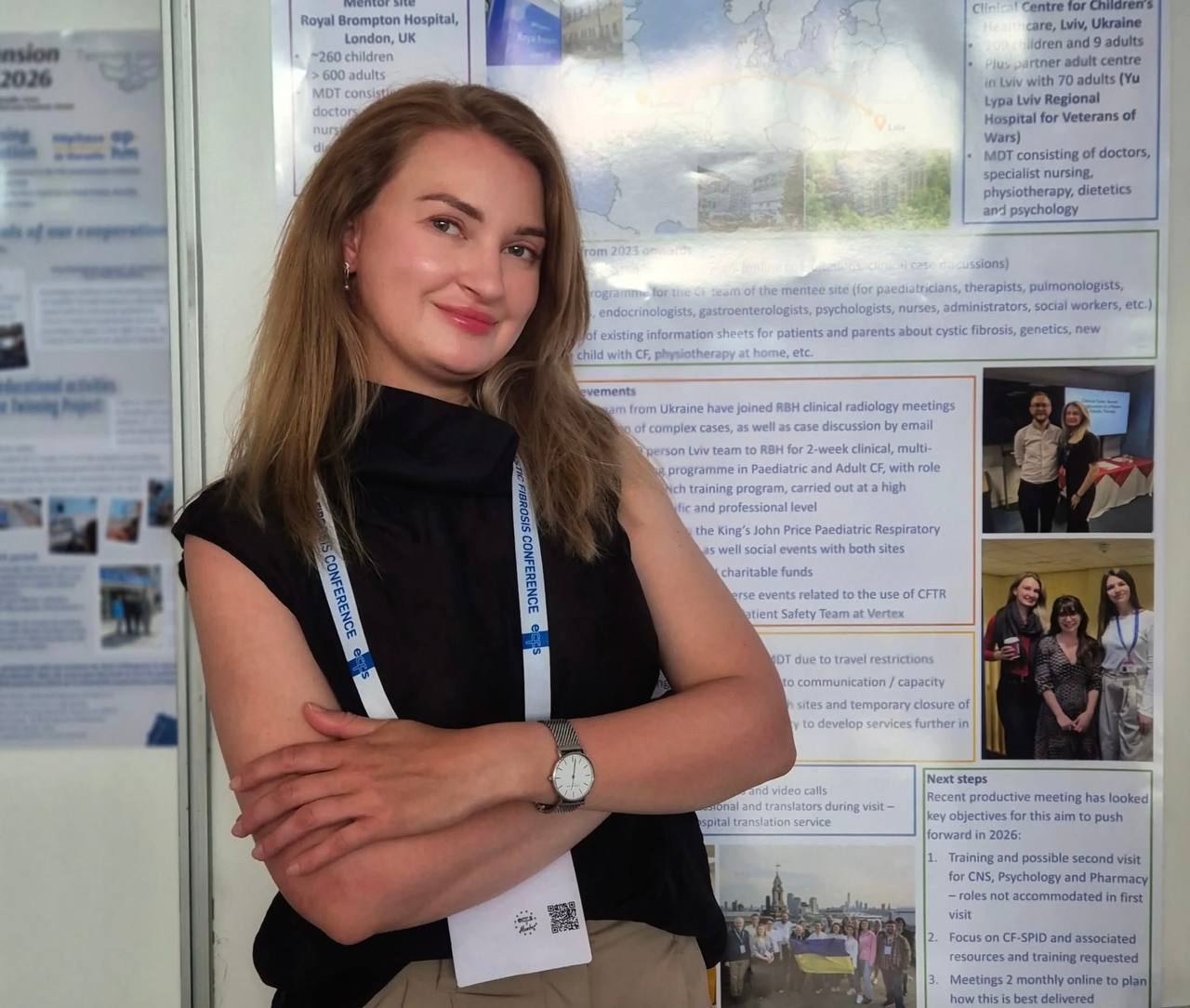
Marta Sheremet – Co-author of an International Publication

Ukraine at the 49th European Cystic Fibrosis Conference

ECFS 2026: New Horizons in Cystic Fibrosis Treatment

49th EUROPEAN CYSTIC FIBROSIS CONFERENCE. LISBON, PORTUGAL

Strengthening the representation of rare disease patients in the Ministry of Health

Charitable Projects Support Program 2026