


17.05.2025
Long-term efficacy of dual CFTR modulator treatment in cystic fibrosis LUM/IVA, Orkambi TEZ/IVA, Symdeko
The study aimed to assess real-world longitudinal changes in FEV1 reduction, BMI, and annual duration of intravenous antibiotic treatment in people with CF homozygous for F508del up to 3 years after the introduction of dual CFTR-modulating therapy LUM/IVA and TEZ/IVA, using NCFR data from 2010 to 2019. A total of 401 CF patients with the F508del/F508del mutation were included.
The NCFR retrospectively collects annual clinical data on CF patients treated at one of seven Dutch CF centers and who provided informed consent for their data to be collected and used for the study. This analysis significantly adds to the existing real-world evidence, as the follow-up period spans an average of 7 years before starting CFTR modulator therapy and up to 3 years after starting the modulator.
This real-world study showed that long-term decline in FEV1 improved up to 3 years after LUM/IVA and TEZ/IVA, which was also observed for improvements in BMI in children but not in BMI in adults. The duration of intravenous antibiotic therapy was reduced in the first year after starting modulators, but this duration increased in subsequent years. Compared with the efficacy reported in previous clinical trials, the real-world efficacy of dual CFTR modulators is less pronounced and varies considerably between FEV1 and different baseline FVC1 levels.
The full content of this work is available at the link
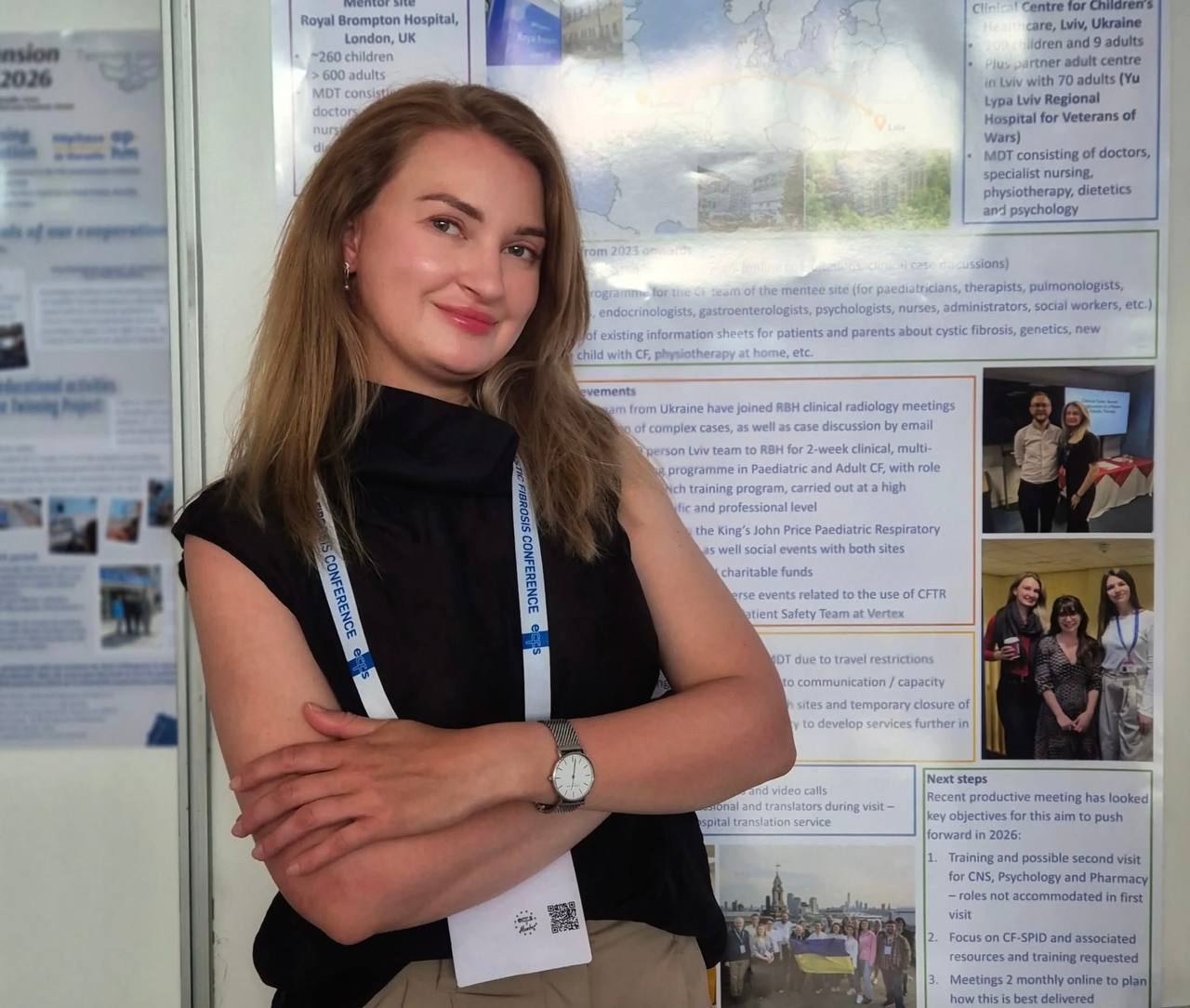
Marta Sheremet – Co-author of an International Publication

Ukraine at the 49th European Cystic Fibrosis Conference

ECFS 2026: New Horizons in Cystic Fibrosis Treatment

49th EUROPEAN CYSTIC FIBROSIS CONFERENCE. LISBON, PORTUGAL

Strengthening the representation of rare disease patients in the Ministry of Health

Charitable Projects Support Program 2026